
Article: How to Authenticate a Luxury Item: The Complete Hannazed 2026 Guide

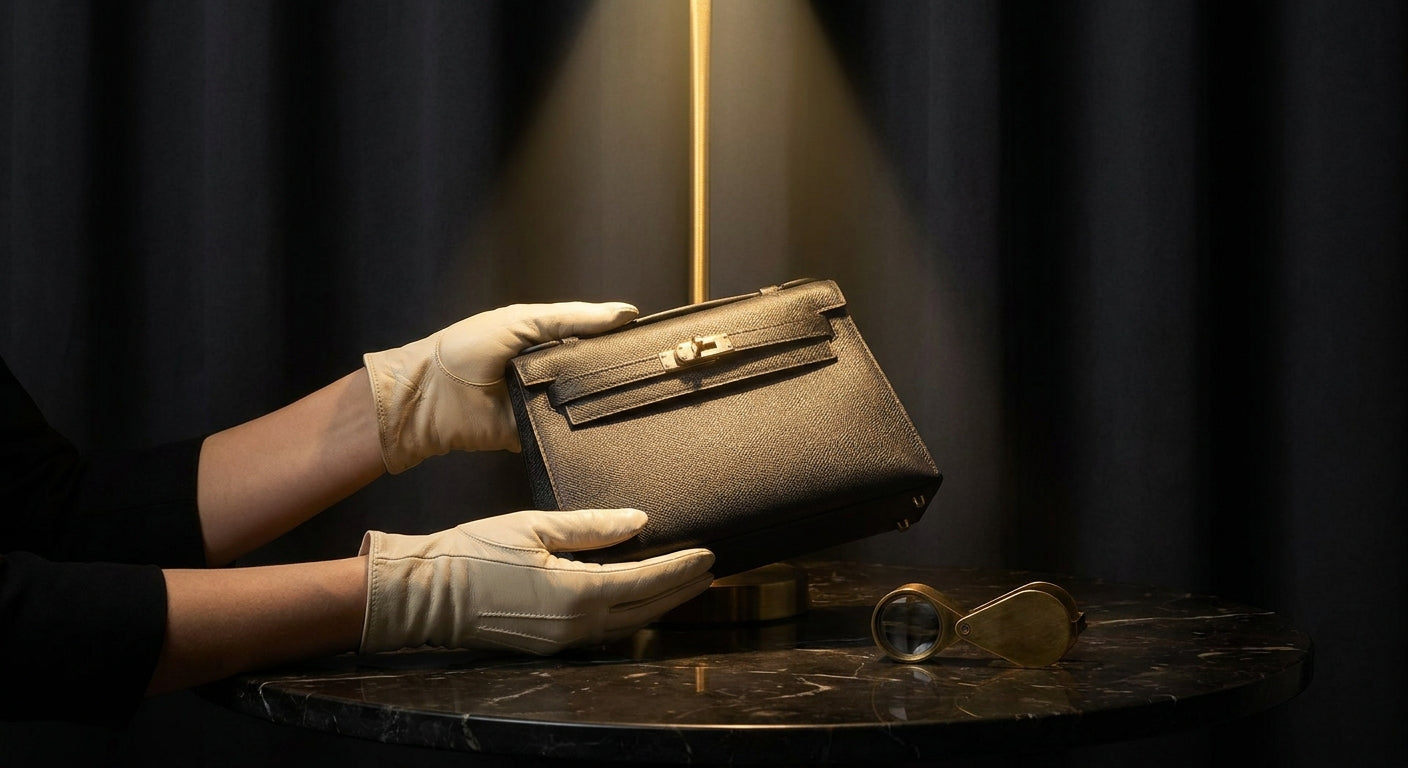
How to Authenticate a Luxury Item: The Complete Hannazed 2026 Guide
The Real Risk: 8.1% of Luxury Items Analyzed in 2025 Were Fakes
In 2025, over 3.7 billion euros worth of luxury products were analyzed using artificial intelligence. The result: 294 million euros corresponded to fakes, representing 8.1% of the total. This figure is not abstract; it represents thousands of buyers who paid real prices for counterfeit items.
The luxury resale market grew from 34.79 billion euros in 2024 to 38.32 billion in 2025, at an annual rate of 10.1%. This boom democratizes access to iconic pieces, but it has also created the most dangerous ecosystem for buyers: more demand, more opportunities for sophisticated counterfeiting.
In 2026, so-called superfakes have changed the rules. These counterfeits use the same Italian and French tanneries as major fashion houses, precision CNC-machined hardware, and even cloned NFC/RFID chips. Visual inspection alone is no longer enough.
This guide covers the exact methods experts use, from physical cues to blockchain technology, to verify any item before purchase. At Hannazed, every item in the catalog comes with a guaranteed authenticity tag. This article explains why that standard matters.
Why Visual Authentication Is No Longer Enough: The Era of Superfakes
A superfake is not a cheap imitation sold in a flea market. It is a high-end counterfeit that can cost between €500 and €6,000, competing directly with the authentic resale market. Its quality is high enough to deceive experienced buyers and even some industry professionals.
Three technical elements make these pieces almost impossible to distinguish with the naked eye:
- Shared Leather Sourcing: Superfakes source their leather from the same Italian and French tanneries that supply houses like Hermès, Gucci, and Prada. The texture, grain, and flexibility of the material can be practically identical.
- CNC-Machined Hardware: Clasps, rings, and buckles are manufactured with industrial precision, replicating the weight and proportions of the original. The surface finish, however, often shows subtle differences under detailed inspection.
- Cloned NFC/RFID Chips: The most advanced models of 2026 incorporate chips that mimic original digital certificates, invalidating simple "chip presence" detection as proof of authenticity.
To illustrate the problem: an authentic Hermès Birkin has 10 stitches per inch, hand-sewn with the "saddle stitch" technique. This is a standard almost impossible to replicate with industrial precision, but superfakes attempt it with increasingly convincing results.
Counterfeit goods represent 3.3% of global trade according to the OECD and EUIPO, and that figure is projected to reach 5% by 2030. Within the European Union, counterfeits of clothing, footwear, and leather goods account for 51% of imported fakes, with estimated annual losses of about 240 billion euros.
The conclusion is direct: if you cannot trust your eyes, you need a structured method. That is exactly what the rest of this guide covers.
The 5-Point Method: What to Physically Verify on Any Luxury Item
Before resorting to technology or professional services, there is a basic protocol for physical inspection applicable to bags, footwear, clothing, and accessories. These five points do not guarantee the detection of a superfake, but they filter out the vast majority of fakes and help identify red flags.
1. Stitching and Finishes
Observe the uniformity of the stitches, their tension, and the number per inch. Remember the Hermès standard: 10 stitches per inch with waxed linen thread. In any luxury brand, the thread should maintain a consistent color with the leather or fabric, with no loose threads or irregular finishes.
2. Hardware and Fittings
Evaluate the weight of clasps, zippers, and rings. The finish (matte or glossy) must correspond to the specific model of the brand. Logo engravings should be clear and proportionate. Superfakes use CNC, but the surface finish, engraving depth, and scratch resistance often reveal differences.
3. Materials and Leather
Texture, smell, and grain consistency are key indicators. High-end genuine leather has a characteristic aroma, difficult to replicate with chemical treatments. Flexibility should be natural, without plastic stiffness. This is, however, the most compromised point with 2026 superfakes, as they share raw material sources with the original houses.
4. Serial Numbering, Date Codes, and Internal Labels
Each brand has its own system. Gucci uses six-digit serial codes followed by four digits on a lower line. Louis Vuitton uses date codes with letters indicating the factory and numbers encoding the week and year of production. Dior and Chanel have their own formats. Verify where they appear (sewn into the lining, stamped on the interior leather) and confirm that the format matches the declared manufacturing period.
5. Packaging and Documentation
Box, dust bag, warranty card, and original receipt are elements that counterfeiters often neglect. Look for typos, inconsistencies in typography, cardboard quality, and print finish. Impeccable packaging does not guarantee authenticity, but defective packaging does raise an immediate red flag.
Technology at the Buyer's Service: Blockchain, NFC, and Digital Passports
The Digital Product Passport (DPP) is a digital certificate linked to the physical item via an NFC tag or QR code. By scanning it with a smartphone, you can access a verifiable record including origin, materials, ownership history, and authenticity certification, all in seconds.
Several brands in the Hannazed catalog already implement this. Gucci expanded its program with Arianee in September 2024 to deploy blockchain certificates across its entire range. Prada launched an internal authentication platform for its leather goods in January 2025. Dior formalized a strategic partnership with Entrupy in March 2025 to strengthen counterfeit detection in its resale channels. Bulgari, Tod's, and Cartier also use digital passports with NFC tags.
The Aura Blockchain Consortium, co-founded by LVMH, Prada, and Richemont, has certified over 40 million products on the blockchain by early 2026. Any consumer can verify an item registered on this platform directly from their phone.
A regulatory change reinforces this trend: the EU Digital Product Passport regulation (under the ESPR) is expected to come into force for luxury items in 2027, making blockchain authentication a legal requirement for brands operating in the European Union.
There is, however, a critical warning. The most sophisticated superfakes of 2026 already clone NFC chips. The difference lies in the cryptographic signature: official authentication platforms do not just verify the presence of the chip, but validate its unique digital signature against the brand's records. A cloned chip will not pass that verification.
The authenticity tags included with each item in the Hannazed catalog align with this new standard of digital verification, offering the buyer an additional layer of trust.
Professional Authentication Services: When and How to Use Them
Turn to a professional service in three scenarios: high-value purchases (above €1,000), items without a verifiable Digital Passport, or when physical signs raise any kind of doubt. The cost of the service is minimal compared to the risk of acquiring a counterfeit.
The main services available to Spanish-speaking consumers include:
- Entrupy: Uses artificial intelligence combined with microscopy to analyze material structure. Achieves 99.1% accuracy in luxury handbags and is the most widely used tool in the sector.
- Real Authentication: Online service with 24- to 48-hour response times, ideal for purchases on resale platforms.
- Authentifier: Mobile app with AI analysis, accessible for quick verifications.
- Vestiaire Collective: Integrates authentication directly into its buying and selling platform.
The partnership between Dior and Entrupy, formalized in March 2025, confirms that authentication AI is no longer just a consumer tool; it is a standard adopted by luxury houses themselves.
The financial impact of unknowingly acquiring a fake is total. A counterfeit item has virtually no resale value, cannot be sold on verified platforms, and can generate customs risks in international imports. In contrast, an authentic Chanel Classic Flap retains between 80% and 90% of its retail value (currently exceeding €11,700 in boutique), and a Louis Vuitton Speedy retains between 60% and 70%. Authentication is not an expense; it is the protection of a real asset.
The Hannazed Guarantee: Why Every Item Arrives Authenticated
At Hannazed, every item undergoes a verification process before being added to the catalog. No exceptions. Each shipment includes its guaranteed authenticity tag, because an investment piece only has value when its authenticity is beyond doubt.
Our curated selection includes houses like Gucci, Prada, Dior, Loewe, and other iconic brands. This curation eliminates the risk of counterfeiting for the buyer: there's no need to become an authentication expert when buying from a source that has already done the work.
Acquiring an authenticated piece from Hannazed is investing in an asset with protected resale value. It's not just fashion; it's an investment decision backed by a rigorous process and premium international shipping that completes an experience of trust and exclusivity.
Discover the current catalog and take the first step towards your collection of authentic investment pieces with a 10% discount on your first purchase using the code HANNAZED10. For early access to new pieces and capsule collections, join The Guest List, our exclusive newsletter.
Conclusion: Authentication Is the First Investment Decision
In 2026, with superfakes costing thousands of euros and replicating even NFC chips, authentication is not optional. It is the first step of any smart luxury purchase.
The hierarchy is clear: 5-point physical verification as an initial filter, Digital Passport or blockchain if the brand offers it, professional service for high-value items, and purchasing from sources with guaranteed authentication like Hannazed to eliminate risk from the origin.
An authentic iconic piece not only defines your style; it is an asset that preserves its value over time. That is the difference between fashion and investment.
Share this guide with anyone building their collection and explore the Hannazed blog for more content on investment pieces and authenticity in the world of luxury.
Read more
International Size Guide: Gucci, Dior, Prada, and More Luxury Brands
Discover how Gucci, Dior, Prada, and other luxury brands' sizing works with this IT, FR, UK, and US conversion guide. Learn how to measure yourself correctly and protect your investment by getting ...
Read more